Bali in 10 Days: The India-Specific Guide to Getting It Right (Visa, Temples, Costs, and the Traffic Nobody Warns You About)
23 April 2026
You'll know Bali is different from other Southeast Asian destinations the moment you drive from the airport. The road is lined with ceremonial gates — candi bentar, the split gateway unique to Balinese Hindu architecture. Offerings in woven palm leaf baskets sit on every horizontal surface: on pavement edges, on the bonnets of parked motorbikes, at the base of ancient banyan trees. A small gamelan ensemble is rehearsing somewhere you can't see. And somewhere above the traffic, a kite in the shape of a dragon is flying from a rooftop, connected to a thread held by a child you'll never locate.
Bali is the only majority-Hindu island in Indonesia — and it practices a form of Hinduism brought from the Majapahit Empire in the 13th century that absorbed local animism and has evolved distinctly from anything on the Indian subcontinent. For Indian visitors, it is simultaneously recognisable and completely unfamiliar.
Visa for Indian Passport Holders
Since 2023, Indian passport holders can enter Indonesia (including Bali) visa-free for 30 days. No application needed — your passport is stamped at Ngurah Rai International Airport. Ensure your passport has at least 6 months validity and return/onward tickets. For longer stays (up to 60 days), the Visa on Arrival (IDR 500,000 / approximately ₹2,800) is available at the airport.
Getting There
- Direct flights: IndiGo, Air India, Batik Air from Mumbai and Delhi to Denpasar (Bali). Flight time: 5–6 hours from Mumbai. Round-trip: ₹22,000–40,000 depending on season.
- Best time: April–October (dry season, clear skies). July–August is peak season — busiest and most expensive. Shoulder months (April–June, September) offer the best balance of weather and value.
The 10-Day Bali Itinerary
Days 1–3: Ubud — The Artistic Heart
Ubud is Bali's cultural centre — sacred temples in rice terraces, traditional craft villages each specialising in one art form (Celuk for silver, Mas for woodcarving, Batubulan for stone sculpture), and the most authentic Balinese Hindu ritual life accessible to visitors. The Ubud Palace hosts Kecak (fire dance) and Barong performances daily — the fire dance, performed by a chorus of 70 men using only vocal rhythms (no instruments), is one of the most extraordinary performance traditions in the world. Entry: IDR 100,000–150,000 (₹550–800).
Tegalalang Rice Terrace at dawn, before the tourist stalls open. Tirta Empul — a sacred spring where Balinese Hindus ritually purify themselves, with elaborate temple structures around the pools. Pura Besakih (Mother Temple), on the slopes of Mount Agung, is Bali's most important Hindu temple complex — 23 temples across several terraces, active with worshippers year-round.
Days 4–5: Munduk and the Mountain Lakes
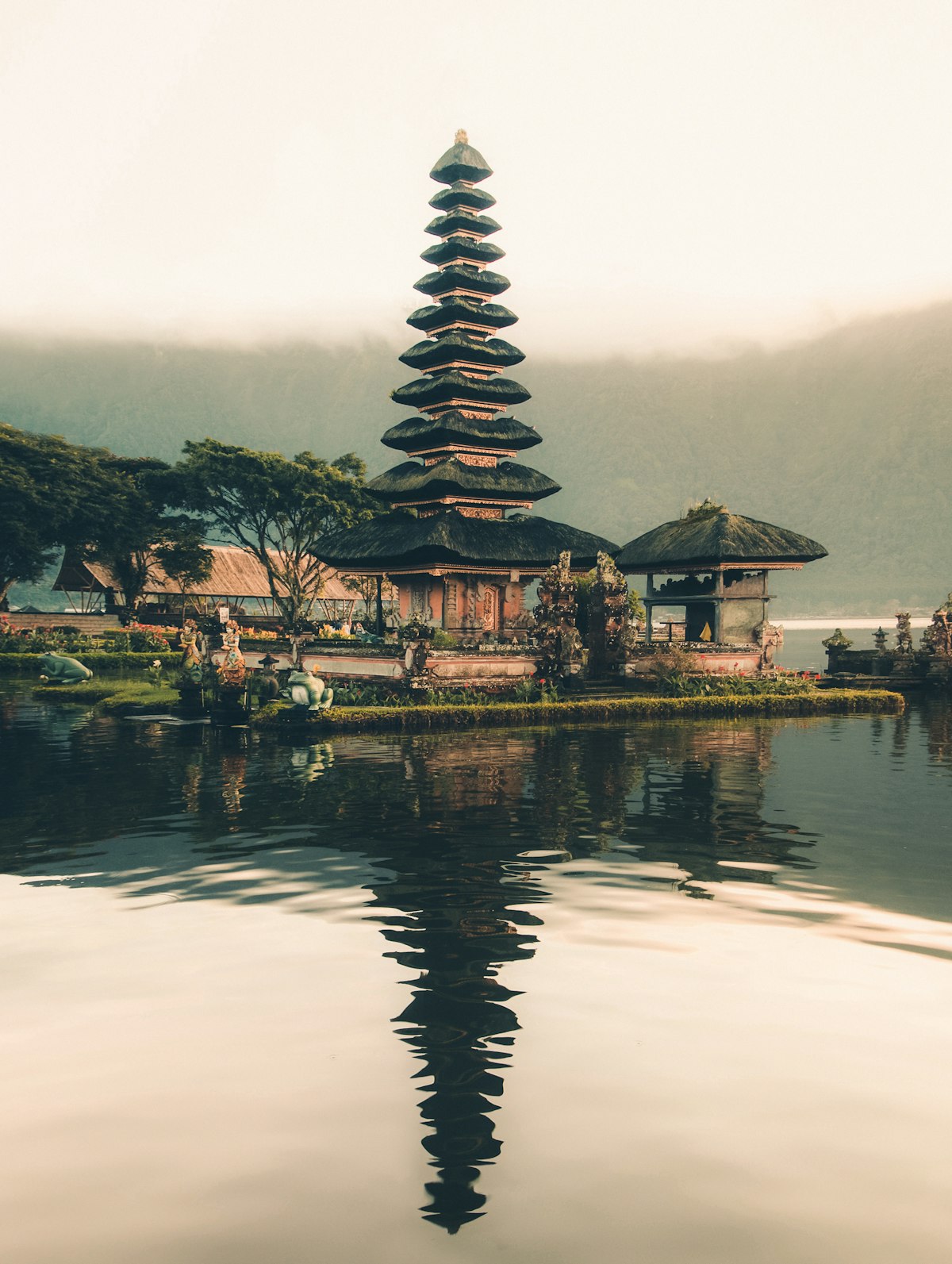
Two hours north of Ubud, Munduk sits in the mountains at 800 metres — the air is genuinely cool, the landscape is waterfalls and clove plantations. Lake Bratan at Bedugul (1,200 m altitude) has the Pura Ulun Danu Bratan temple built over the water — one of Bali's most photographed images. The drive between Munduk and Ubud passes through villages where every household has an active weaving or painting studio.
Days 6–7: Seminyak and Canggu
Seminyak and Canggu are Bali's best-known beach areas — consistently good sunsets, a developed café and restaurant scene, surf lessons for beginners (₹1,500–2,500/session), and enough beach clubs and rooftop bars to spend two full days without repeating a venue. Canggu has evolved into a significant digital nomad hub with excellent co-working spaces — an unusual combination with beach life that works surprisingly well.
Days 8–10: Uluwatu and Nusa Islands
Uluwatu Temple sits on a 70-metre sea cliff at Bali's southern tip — the Kecak fire dance performed here at sunset against the backdrop of the cliff and the Indian Ocean is the most cinematic version available. Below the temple, white-sand beaches in limestone coves (Padang Padang, Bingin, Balangan) receive good surf and have beach shacks.
Fast boat to Nusa Penida (45 minutes, IDR 150,000 / ₹800 one way): the dramatic viewpoint at Kelingking Point (T-Rex cliff) and the snorkelling with manta rays at Manta Point are Nusa Penida's signatures. Hire a scooter or join a day tour — roads are rough but manageable.
Traffic in Bali: The Honest Assessment
Bali traffic, especially in the Kuta-Seminyak-Canggu corridor, has become genuinely bad. A 15 km drive can take 90 minutes at peak hours. Hire a private car with driver (IDR 400,000–600,000 / ₹2,200–3,300 per day) for inter-area moves. Within Ubud and Canggu, rent a scooter (IDR 60,000–80,000 / ₹330–440 per day) — you need an international driving licence, though in practice enforcement is inconsistent. Start driving early (before 8 AM) or after 8 PM for clear roads.
Bali Cost Breakdown (10 Days, Per Person)
| Category | Budget (₹) | Mid-Range (₹) |
|---|---|---|
| Flights (round trip from Mumbai) | 22,000–30,000 | 30,000–45,000 |
| Accommodation (per night) | 1,200–2,500 | 3,500–8,000 |
| Food (per day) | 700–1,200 | 1,500–2,800 |
| Transport (car hire + petrol, total) | 8,000–12,000 | 15,000–22,000 |
| Temple entries + activities | 3,000–5,000 | 5,000–8,000 |
| 10-Day Total (per person) | ₹50,000–70,000 | ₹90,000–1,30,000 |
Vegetarian Food in Bali
- Bali has excellent vegetarian options — ask for no daging (no meat) and no ayam (no chicken)
- Nasi goreng (fried rice) and mie goreng (fried noodles) are standard vegetarian options at every warungs (local restaurants)
- Smoothie bowls and fresh coconut water are available everywhere and excellent
- Ubud's café scene has built around organic, plant-based food — some of the best vegetarian options are here
The familiar-yet-foreign quality of Bali's Hindu culture creates a specific experience for Indian visitors: the garuda, Ganesha, the lotus motif, the incense, the bell — all present, all slightly different. Watching a Balinese family perform a temple ceremony in full traditional dress at a junction temple at 7 AM, leaving offerings that will dissolve in the rain before noon, does something particular to an Indian traveller. Recognition and difference in the same breath. This is what makes Bali different from every other international destination available from India.