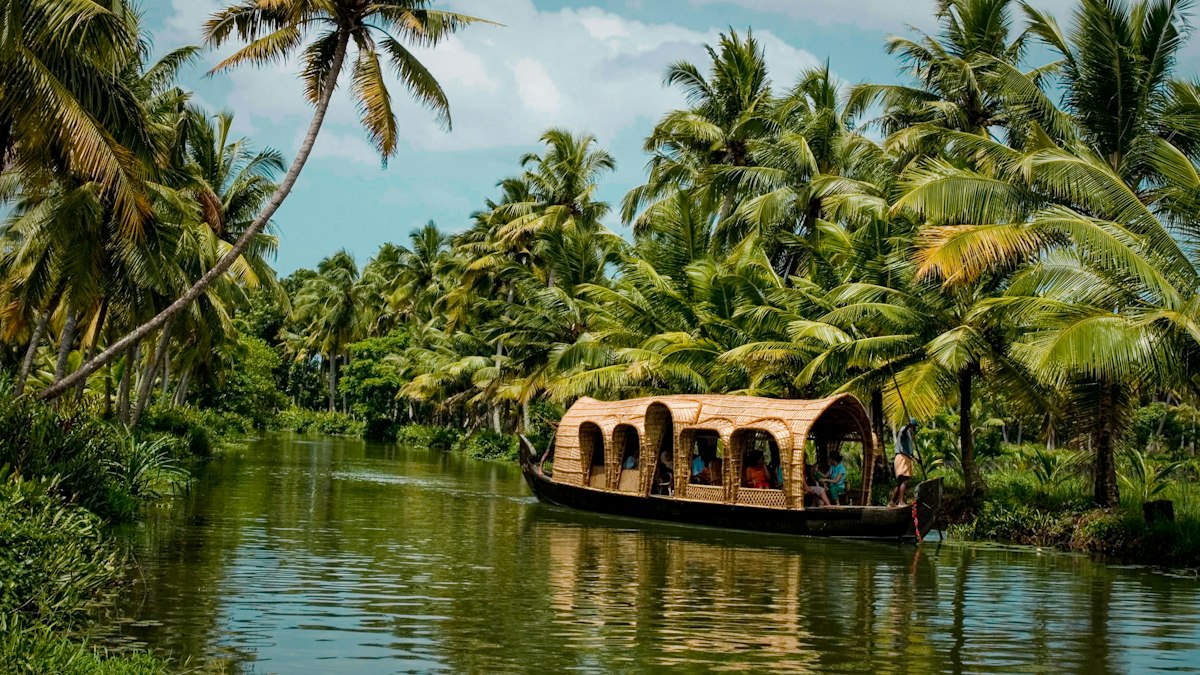
Kerala Backwaters, Tea Mountains, and a Fort Kochi Evening: The 7-Day Circuit That Works
23 April 2026
Kerala has a density of beauty that takes some getting used to. In the span of a single day you can wake up in a houseboat to the sound of a kingfisher, drive through rubber tree forests into tea country, and watch sunset from a rooftop above Fort Kochi's 500-year-old Chinese fishing nets while the call to prayer echoes across a harbour that has seen Portuguese, Dutch, and British ships anchor in the same water. This is not marketing. This is what the state does.
How to Structure a Kerala Circuit
The classic error is rushing. Kerala is not a list of attractions to complete — it's a pace, a texture, a relationship with water and green. The best Kerala trips move slowly and stay somewhere long enough to understand it. Here is a 7-day circuit that works:
| Day | Location | Stay |
|---|---|---|
| 1 | Arrive Kochi, Fort Kochi | Heritage guesthouse, Fort Kochi |
| 2 | Fort Kochi exploration | Same |
| 3 | Kochi to Munnar (4 hours) | Tea estate or hill resort |
| 4 | Munnar — Eravikulam, tea estates, Mattupetty Lake | Same |
| 5 | Munnar to Alleppey (4.5 hours) | Houseboat (overnight) |
| 6 | Backwaters drift, arrive Varkala | Cliff guesthouse, Varkala |
| 7 | Varkala beach, fly from Trivandrum | — |
Fort Kochi: Where History Didn't Disappear
Fort Kochi feels like a colonial fever dream gently maintained — narrow lanes with Dutch and Portuguese architecture, St. Francis Church (the oldest European church in India, where Vasco da Gama was originally buried), Kerala's fishing village life operating in the same harbour as boutique hotels in restored heritage buildings. The Jewish Quarter (Jew Town), now mostly antique shops and spice traders, still has the Paradesi Synagogue (1568) — the oldest active synagogue in the British Commonwealth.
The Chinese fishing nets at Fort Kochi — introduced to India by the court of Kublai Khan in the 13th century — are operated by a small community of fishermen who pull them in with counterweights on long bamboo poles. They catch fish. They sell them on the spot. You can buy the fish and take it to a nearby restaurant who will cook it to order for ₹150–200. This is the correct way to lunch in Fort Kochi.
Kathakali performance: ₹350–500 at the Kerala Kathakali Centre — 45 minutes of ritual makeup application (itself extraordinary to watch) followed by a performance in full classical costume. The expressiveness of Kathakali face language, which takes decades to master, is unlike anything else in Indian classical arts.
Munnar: The Tea Country That Looks Like a Painting
Munnar sits at 1,600 metres with tea estates blanketing every hillside — a sea of manicured green in waves and rows. The Eravikulam National Park protects the Nilgiri Tahr (a mountain goat endemic to the Western Ghats) and the Neelakurinji flowering plant that blooms once every 12 years in purple carpets across entire hillsides. (Next bloom: 2030.)
The TATA Tea Museum in Munnar town documents the history of tea cultivation in this region — from plantation labour conditions in the colonial era to modern processing. More substantive than most tea estate "tours." Mattupetty Dam's reservoir offers boat rides and views of the Shola forests. Echo Point is worth the 15-minute detour.
Stay at a tea estate homestay rather than a hotel — waking in a planter's bungalow surrounded by 100-year-old tea plants, smelling the morning picking underway, is entirely different from any hotel experience. Cost: ₹2,500–5,000/night with breakfast.
Alleppey Backwaters: The Houseboat Decision
Every Kerala itinerary includes Alleppey. The question is how to do it right. Key facts:
- There are roughly 1,200 houseboats operating in the backwaters. Quality varies from "hotel-quality cabin with AC and sun deck" to "structurally questionable and poorly maintained." Read reviews on recent bookings carefully.
- Overnight houseboat (with all meals): ₹8,000–15,000 for a 2-bedroom boat (2 people). The experience is genuinely different from a day cruise — the evening when you anchor in a quiet canal and the only sounds are water birds and distant water pumps is what people remember twenty years later.
- Day cruises (4–6 hours): ₹4,000–6,000 for the boat. Significantly cheaper, covers the highlights, but you don't get the overnight silence.
- Public ferry: KSRTC runs a public boat from Alleppey to Kottayam for ₹15–25. The same canals, no frills. For budget travelers, this is not a compromise — it's a different and legitimate way to experience the backwaters with local life all around you.
Varkala: The Natural Spa of Kerala's Coast
Varkala is unlike Goa in every way that matters: quieter, more naturally beautiful (the beach sits beneath a laterite cliff), and with a strong Ayurvedic wellness infrastructure alongside the beach cafes. The Janardanaswamy Temple at the cliff's southern end has an active pilgrimage tradition — the contrast between the beach-café north and the temple south of the same cliff face is a distinctly Varkala thing. Natural spring water falls directly onto the beach at one point of the cliff face — the locals collect it; some claim it has healing properties.
Kerala Trip Budget
| Category | Budget (₹) | Mid-Range (₹) |
|---|---|---|
| Flights (Mumbai/Delhi to Kochi, RT) | 8,000–14,000 | 14,000–22,000 |
| Accommodation per night | 800–1,500 | 2,500–5,000 |
| Houseboat (overnight, 2-person) | 6,000–8,000 | 12,000–20,000 |
| Food per day | 400–700 | 800–1,500 |
| Internal transport (buses + private cabs) | 3,000–5,000 total | 6,000–10,000 total |
| 7-Day Total (per person) | ₹25,000–38,000 | ₹45,000–70,000 |
Kerala Food: What to Eat and Where
- Appam with stew: Breakfast. The fermented rice pancake with its lacy edge, soft centre, served with a coconut milk vegetable or chicken stew. Available at any Kerala home-style restaurant.
- Karimeen pollichathu: Pearl spot fish marinated in spices and banana leaf-wrapped, grilled. The defining dish of the backwaters.
- Kerala Sadya: 28-course vegetarian feast served on banana leaf, eaten with the right hand, on festival days and Sundays at many restaurants. ₹200–350.
- Filter kaapi: South Indian filter coffee. Not comparable to the café versions. The proper version — dark, strong, poured from height into a metal tumbler — is the correct breakfast liquid everywhere in Kerala.
Kerala remains one of India's most consistently rewarding travel destinations precisely because it doesn't ask you to rush. The backwaters move at whatever speed the water decides. The tea estates are best at dawn, when the mist is still. Fort Kochi reveals itself in layers, on a second or third walk. Give this state more time than you planned, and it will give you back more than you expected.